The photo you will care most about in fifteen years is probably one you would delete today. Blurry, badly lit, taken from a bad angle in a kitchen you were embarrassed by. That is the strange arithmetic of documentary baby photography, and it is worth understanding early, because the window on this particular version of your life closes fast.
Documentary photography, sometimes called lifestyle photography, means photographing what is happening rather than arranging what should happen. Nobody is placed. Nothing is tidied. The camera simply shows up.
What is the difference between documentary and posed baby photography?
Posed portraiture is a construction. You choose the backdrop, control the light, position the baby, and remove everything that does not serve the picture. Done well it produces images that will hang on a wall for decades and never look dated.
Documentary work removes all of that control on purpose. You take the room as you find it, the light as it falls, and the baby as they are, screaming or asleep or covered in yogurt.
| Posed portrait | Documentary | |
|---|---|---|
| Who directs | You do | Nobody |
| Setting | Chosen and cleared | Whatever the room is |
| Light | Controlled | Accepted |
| Best result | Timeless and frameable | Specific and true |
| Answers | What did they look like? | What was life like? |
The comparison below lays the two approaches side by side. Notice the last row in particular, because those two questions are genuinely different, and a photo answering one rarely answers the other.
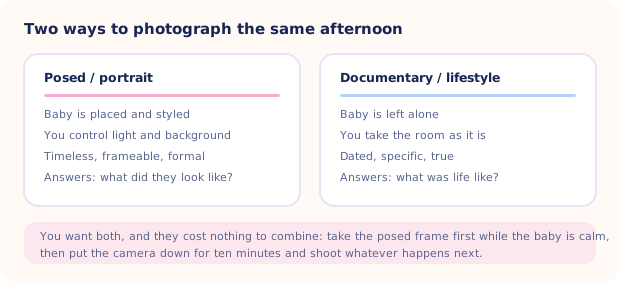
What documentary frames capture that portraits cannot
Ask any parent of a ten-year-old what they wish they had photographed and the answers are remarkably consistent.
- The kitchen at 8am. Bottles drying, the bouncer wedged between the table and the wall, the specific chaos of that season. You will forget the layout of your own life faster than you expect.
- The 3am feed. One lamp, a slumped shoulder, a baby working hard. Almost nobody photographs it because it feels unremarkable while it is happening. It is not unremarkable a decade later.
- Sibling chaos. A four-year-old draping themselves over a newborn with more enthusiasm than caution. Posed sibling shots have their own charm, and there are plenty in our sibling newborn photo ideas, but the unposed version shows the relationship as it actually was.
- The way you carry them. Hip, shoulder, forearm, sling. Each parent has a default and none of you can describe it.
- Ordinary objects at their real scale. The bathtub seat, the swing, the pile of size-one clothes about to be outgrown.
These are the photographs that a stranger would scroll past and that you will not be able to look at without your chest tightening.
How do you actually shoot documentary baby photography?
Stop directing
The instinct to say "look at me" is strong and it destroys the frame. Documentary photography starts the moment you stop asking for anything. If your baby glances up and smiles, take it, but do not go fishing. When you do want expressions, that is a separate mode with its own toolkit, covered in how to make a baby smile.
Shoot wider than feels right
Tight crops are portrait instincts. Documentary work wants context. The room, the doorway, the older sibling half out of frame, the mess on the counter. Include the things you would normally move out of shot, because the things you are embarrassed by now are the details that date the photo in the best possible way.
How much should you worry about light and sharpness?
Accept imperfect light
Bath time happens at 6pm in a windowless bathroom, and that is fine. Grain beats no photograph. Turn off the flash, because it kills atmosphere and startles everyone, and let the picture be dim and warm. If you want the light to be good more often, the timing logic in the best time of day for baby photos helps, but do not let it become a reason to wait.
Take many more frames than you need
Real moments are unrepeatable, and babies move constantly. Shoot in bursts, then delete without sentiment later (though not the same evening, when you are still judging the frames by whether they are flattering). A ten-to-one keeper ratio is normal for professionals working this way.
Where should you put the camera?
Get low, and stay put
Shooting from adult standing height flattens everything and makes every photo look like surveillance. Drop to the baby's eye level. Then stay in one spot for a few minutes rather than circling, and let the scene forget you are there.
Sitting on the floor also changes what the baby does. An adult at standing height is an adult about to pick them up. An adult at floor height is furniture, and the play resumes. Give it two or three minutes before you expect a frame worth keeping.
The test for a documentary frame is simple. If someone else's baby were in it, would the photo still be interesting? If not, it might be the most valuable picture you take all year, because it belongs entirely to your family.
Both approaches earn their place
This is not a competition. Posed portraits give you the clean, printable images that go on the wall and into the grandparents' hands. Documentary frames give you the record of what those months were actually like. They serve different purposes and they cost nothing to combine.
Take the posed frame first, while the baby is calm and there is still patience in the room for arranging things. Our guide to a newborn photoshoot at home covers that half. Then put the setup away, leave the phone within reach, and shoot whatever the next hour brings.
A workable ratio for most families is one posed session a season and one undirected frame most days. The posed pictures are the ones that get printed and hung. The undirected ones are the ones that get looked at, which is a different sort of value and not a lesser one.
Be in the frame yourself
Look through your camera roll from the last three months and count the photos you appear in. For the parent who takes most of the pictures, the number is usually close to zero. Your child will want photographs of you holding them, not just photographs you took of them.
- Hand the phone over. Ask explicitly, and ask for more than one. Your partner will take two frames and stop unless you say otherwise.
- Use the self-timer or a burst. Prop the phone on a shelf, start a ten-second timer, and go back to whatever you were doing rather than posing.
- Shoot mirrors. The bathroom mirror during a diaper change is an honest self-portrait and takes two seconds.
- Photograph parts, not portraits. Your hands supporting a head, a foot against your forearm. No make-up required, no getting dressed.
Once you have that pile of frames, keeping them findable matters, and our post on organizing baby photos covers a system that survives real life.
Where the app fits
Documentary photography is the half you have to do yourself, because no tool can invent your actual Tuesday morning. The styled-portrait half is more automatable than it used to be. Totti takes one clear photo and regenerates the backdrop, outfit, styling and lighting into a studio-style portrait while aiming to keep your baby recognizable. Review the result against the source. The polished frame no longer requires a cleared room and a free afternoon.

Let the posed half take care of itself
50+ templates across Classic, Cozy and Outdoor styles, milestone cards with wooden plaques, and HD export at 2048×2560. Free to download on iPhone, so your energy can go into the unrepeatable photos instead.
Get Totti on the App StoreTake the wall portrait. Then leave the kitchen exactly as it is, get down on the floor, and photograph the version of your life that will be gone in six weeks.