Days 5 to 14 are often described as the answer to when to take newborn photos. Treat that range as a studio scheduling convention for a particular sleepy, styled look, not as a developmental promise, safety rule or deadline. Every baby and recovery is different.
Choose timing around recovery, medical care, feeding and the family's energy. If you want a physically posed studio portrait, hire a trained specialist and ask about their safety practices. For at-home photos, use natural back-lying, detail or ordinary parent-held views at any age-appropriate moment.
Why do studios mention days 5–14?
Some studios reserve this early range because it fits their preferred workflow and visual style. That does not mean:
- Every baby will sleep through a session. Care needs and sleep patterns vary, and a photo should never determine feeding or sleep timing.
- Parents should wrap or curl a baby for a photo. At-home specialty posing is not made appropriate by choosing an earlier date.
- A later portrait is less valuable. Alert expressions, parent-held frames and milestone details tell an equally important story.
If you are planning a simple session, our newborn photoshoot at home guide covers a conservative setup using soft window light and an alert second adult.
What about "Fresh 48" hospital photos?
A "Fresh 48" is a documentary-style session made during the first days, often in a hospital room. Only photograph when the patient, care team and facility rules allow it. Do not interrupt care, move equipment or ask anyone to reposition for the camera.
Keep the photo list observational: a supported family hold, hands, feet or a quiet room detail. Wristbands and bassinet cards can reveal names, dates, record numbers or other identifying information, so review and crop images before sharing them.
Use the room light as it is unless staff say an adjustment is fine. Never switch off clinical lighting, move blinds, cables or medical equipment for a picture.
What changes after week 2?
There is no universal day-15 transition. As babies grow, the available expressions and family routines change on individual schedules:
- Awake expressions may become easier to catch. Photograph them when they happen naturally rather than trying to prompt one.
- Family interactions change. Parent-held frames, feeding details and everyday routines offer new documentary options.
- Clothing and backgrounds can do the styling. You do not need wrapping or physical posing to create a coherent portrait.
- Milestone series become useful. A repeated, age-appropriate setup can record change without recreating a newborn pose.
The practical move is to update the shot list rather than chase an earlier look. Use natural expressions, detail photos and ordinary supported family holds.
The timeline at a glance
Read the right-hand column as a shot list rather than a ranking. Every row produces photos worth printing, and the only thing that changes across them is which style comes easily on that day.
| Timing | Approach | Photo ideas |
|---|---|---|
| First days | Documentary only when family, staff and facility allow | Supported family hold, hands, feet, room details |
| First weeks | Follow care routines; do not schedule posing around sleep | Back-lying, detail or ordinary parent-held views |
| Later weeks | Photograph expressions as they naturally occur | Family photos, everyday routines, detail portraits |
| Any later age | Use an age-appropriate natural setup | Milestone series and parent-held portraits |
The popular studio window is a scheduling convention for one style, not your only chance to make a meaningful portrait.
Can you still get great portraits after the window?
Life happens. Recovery, medical care, family capacity or simply not knowing about studio conventions can move a session later. The backdrop, lighting and card layout can still create a cohesive portrait without trying to make an older baby imitate a newborn pose.
An AI baby photo generator like Totti can rebuild elements of a clear source image, including the background, lighting, outfit and milestone-card styling. AI may also alter facial details, hands, clothing or proportions, so compare every result with the source and discard anything inaccurate.
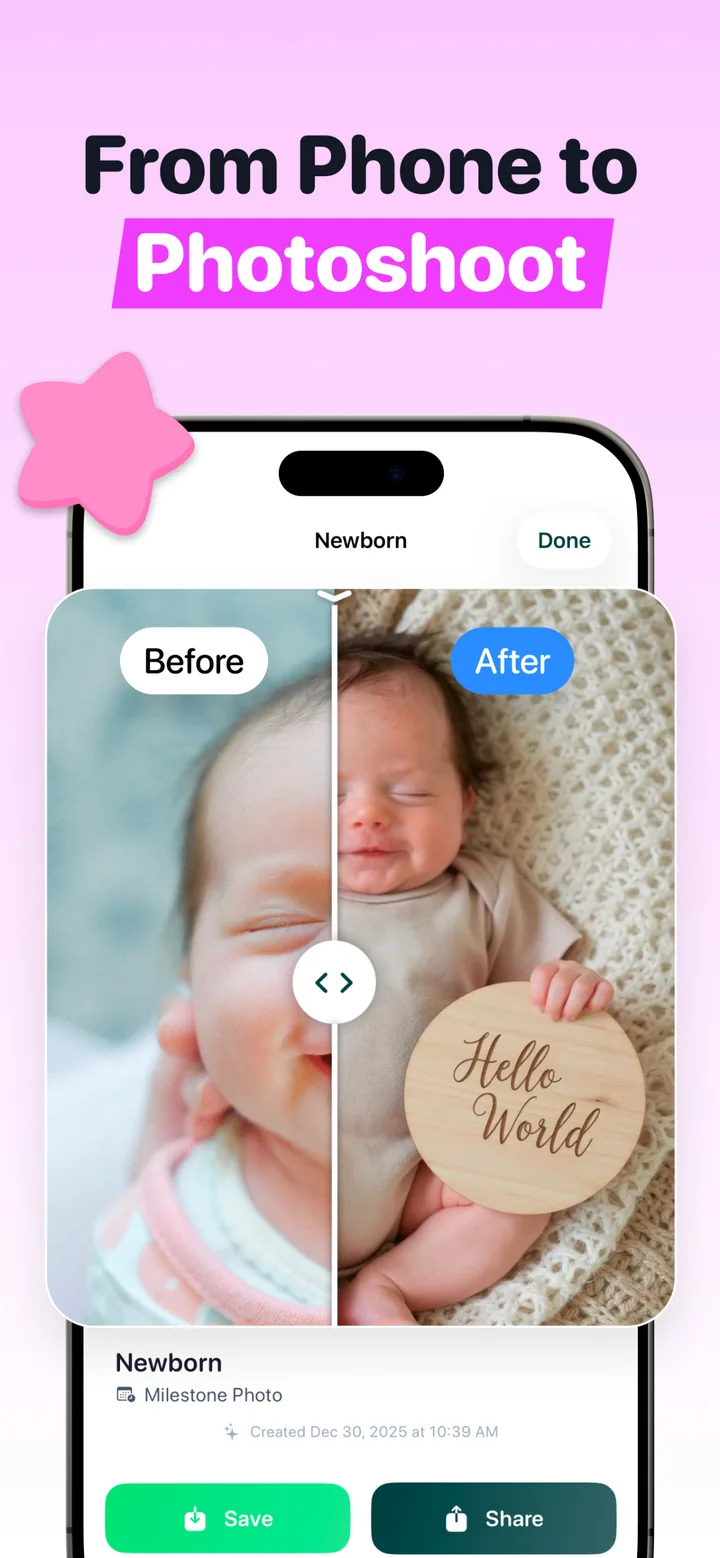

Choose a day that works for your family
Upload one clear photo of your baby, newborn or not, choose from 50+ templates, and export a studio-style portrait in HD (2048×2560). Free to download on iPhone.
Get Totti on the App StoreHow to make the most of whatever window you're in
- Inside days 5–14: choose a naturally calm moment without delaying care. At home, stick to back-lying, detail or ordinary parent-held views; our newborn photo poses guide explains why specialty poses are not DIY setups.
- Weeks 3–8: look for natural expressions, hands, feet and parent-held frames. Do not use a photo or editing result to assess skin or any other health concern.
- 2 months and beyond: switch goals from "curled newborn" to "milestone series." A monthly photo rhythm gives you something a single newborn session never can, which is the story of your baby growing. Our baby milestone photos guide shows how to set one up.
- Whenever you shoot: review the basics in our newborn photography safety rules first. No photo is worth a risk.
Choose the day that fits recovery, care and family energy. Days 5–14 are an optional studio convention, Fresh 48 photos depend on consent and facility rules, and later portraits are not a fallback.