Ten minutes is a useful planning window for sibling newborn photos with a toddler. Make separate portraits the default. If you want one together frame, keep the newborn in an alert adult's ordinary supported hold while a second adult photographs and the toddler sits beside the holder. End the session as soon as either child needs care or space.
The together shot is optional. Most parents never hear that, and it is the pressure release the whole plan runs on. The rest of this is the realistic playbook.
How long will a toddler actually cooperate?
A toddler's cooperative window may be about as long as a song. Plan for a brief session, expect only a few usable frames, and count anything more as a bonus. The candid frames between prompts are often the ones you'll value later. Blurry-but-real beats sharp-but-forced.
Order matters more than duration. Set the room, the light and the baby first, and bring the toddler in last, once everything else is ready. A toddler who arrives to a scene that is still being built spends their whole cooperative window watching you move furniture.
Which sibling setups minimize contact?
The lowest-complexity option is to photograph the children separately. For a shared frame, keep the newborn in an alert adult's normal, fully supported hold and seat the toddler beside that adult. A toddler should not hold, support, lean over or lie beside a newborn for a photo. A nearby spotter cannot make an adult bed, couch, pillow or prop setup appropriate. Review our newborn photography safety checklist before starting.
- The parent-held family frame. One adult supports the newborn as they normally would; the toddler sits or stands beside the adult while another adult takes the photo.
- The matched pair. Photograph each child separately against the same plain background and place the finished portraits side by side.
- The over-the-shoulder frame. Photograph the toddler from behind an adult who is holding the baby, leaving a comfortable gap and avoiding any request to touch or lean in.
Which sibling poses need no contact at all?
Use these when the toddler is energetic, there is only one adult available or either child needs a quieter session.
- Two portraits, one layout. Photograph the newborn and toddler at different times, then use a diptych, card or matching frames to tell one story.
- Details from separate moments. Pair a close-up of the newborn's feet with the toddler's hands holding a drawing or welcome-home sign, photographed separately.
Age-by-age quick reference
| Situation | Lower-complexity option | Skip |
|---|---|---|
| Toddler is unpredictable or wants to touch | Separate portraits in a matched layout | Shared surface or contact prompts |
| Toddler can sit calmly beside a parent | Parent-held newborn with a second adult photographing | Toddler holding or supporting baby |
| Only one adult is available | Photograph each child separately | Any together setup that divides attention |
Bribery and timing tactics that actually work
- Follow both children's routines. Choose a naturally calm moment, but never delay feeding, sleep or other care for the session.
- Give the toddler a job. "Official baby-checker" or "blanket boss" beats "sit still." Toddlers cooperate for roles, not requests.
- Pay in advance. A small treat before the shoot buys more goodwill than one promised after. Save a second for mid-shoot morale.
- Let them press the shutter. Two minutes of the toddler "taking pictures" of the baby earns you five minutes of them being in pictures.
- Quit while you're ahead. The meltdown always comes. End the session one frame after your keeper, not twenty frames into the protest.
Dress both kids in simple, coordinating neutrals: cream, oat, soft gray. And dress the toddler last, thirty seconds before shooting. A toddler in a fancy outfit for more than five minutes is a toddler with yogurt on a fancy outfit. Keep a spare top within reach for exactly this reason.
You're not managing a photoshoot with a toddler in it. You're managing a toddler with a photoshoot around them. Plan for the child you have, not the Pinterest board you saw.
The individual-then-composite approach
Photograph each child separately at a naturally calm moment, then present the shots together, side by side in a card layout or as a matched series on the wall. For the newborn, keep the source photo to a simple back-lying view, a detail photo without repositioning or an ordinary parent-held frame, as explained in our newborn poses guide. Nobody has to cooperate at the same time.
Shoot both children against the same background and in the same light if you can, even on different days. Matching light is what makes two separate portraits read as one set when they end up side by side on a shelf.
Pair Totti portraits with candid sibling shots
This is where Totti slots neatly into the sibling plan. The app generates portraits one baby per photo. That per-photo approach gives the newborn an individual studio-style portrait (and it pairs beautifully with a regular candid of the toddler). Take your best solo snapshot of the baby, choose a template like Sweet Slumber or Potato Sack Pose, and export in HD.
Then build the frame series. The newborn's generated portrait goes in a Polaroid or Wood frame from the app, printed next to your favorite candid of the two kids together and a solo shot of the proud big sibling. Three frames, one story — and only one of them required anyone to sit still.
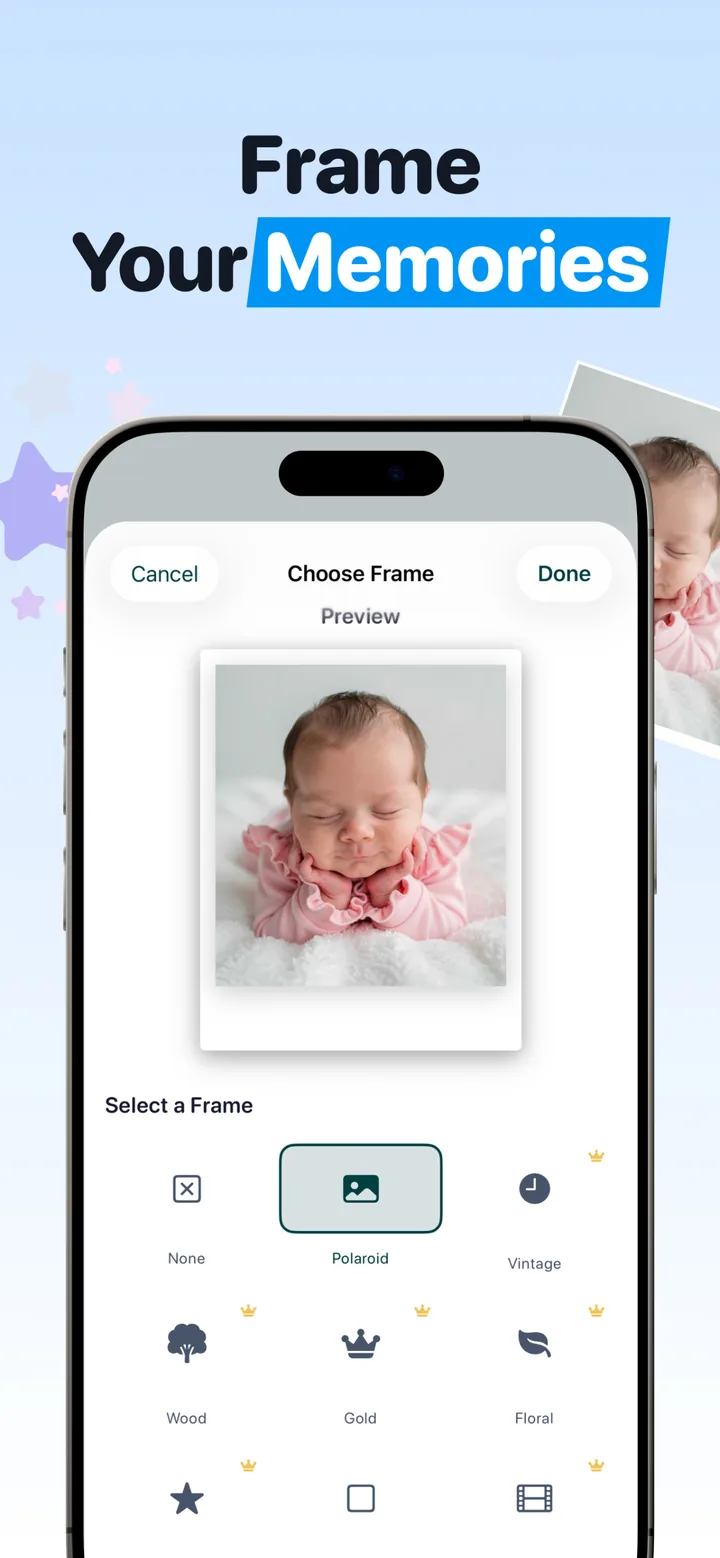

Build the set from one solo photo
Upload one clear solo photo, pick from 50+ templates, add a matching frame, and export in HD (2048×2560) after the physical session is over. AI can alter details, so compare the output with the source. Free to download on iPhone.
Get Totti on the App StoreSo make separate portraits the default, use a parent-held setup if you attempt a together frame, and quit early. A matched frame series can tell the sibling story without asking a toddler to support or pose beside a newborn.