Which newborn photography poses can a parent photograph without physically arranging a baby, and which need a trained newborn photographer? That distinction matters more than styling. Several familiar newborn portraits only look unsupported because a professional kept hands on the baby's head and body in every source frame, then combined the frames in editing.
This printable newborn poses cheat sheet takes a deliberately conservative approach. The at-home column contains only three no-pose photo ideas: leave baby on their back, photograph small details without repositioning, or have a second adult photograph a baby already held normally by a parent. Side-lying, tummy, wrapped, upright, chin-on-hands and suspended arrangements are not taught as DIY setups here.
Scope: the author is Totti's independent iOS developer, not a pediatric clinician or credentialed newborn photographer. This is source-backed photography information, not medical advice or an expert safety review. Ask your pediatric clinician about individual health or positioning concerns, and use a trained newborn photographer for any physical pose.
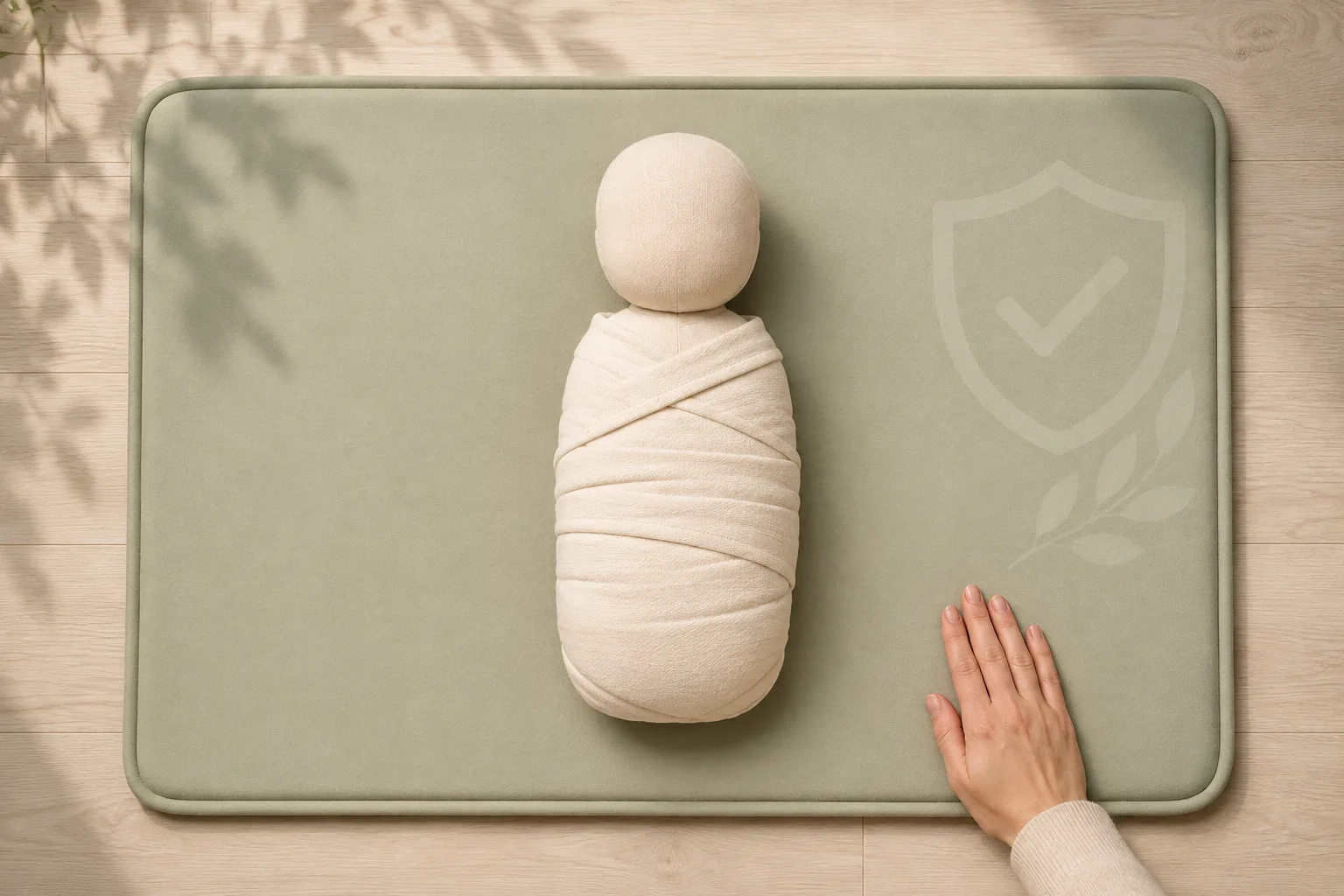
Newborn poses cheat sheet: at home or professional-only?
The conservative at-home starting point is a back-lying photo with an alert adult beside the baby throughout. If the baby is asleep, use the baby's normal safe sleep space and do not add photo props. The American Academy of Pediatrics recommends back sleeping on a firm, flat surface, while the NIH Safe to Sleep campaign describes a firm, flat, level sleep surface with only a fitted sheet. These are sleep recommendations, not a claim that any photography setup is risk-free.
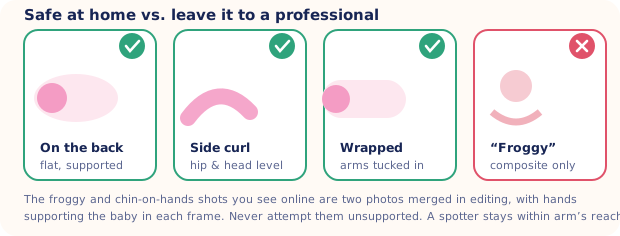
Quick visual: at home, photograph the position or hold your baby is already in. Any setup that asks you to arrange or balance a newborn belongs with a trained professional.
Download the printable newborn poses cheat sheet (SVG) · Read the source-backed safety guide
| Pose | Label | Use this rule |
|---|---|---|
| Back-lying portrait | At-home, no pose | Leave baby on their back; an adult stays beside baby; secure the camera or phone |
| Detail close-ups | At-home, no pose | Photograph hands, feet or eyelashes without repositioning baby |
| Parent-held portrait | At-home, no pose | One parent uses their normal supported hold while a second adult takes the photo |
| Side, tummy or wrapped setup | Professional guidance | This guide does not give DIY positioning or wrapping instructions |
| Upright Potato Sack | Professional composite | Hands support the baby in every source frame and are removed in editing |
| Curled Taco or Froggy | Professional composite | Head and body remain supported in every source frame; do not recreate unsupported |
If your baby was premature, has breathing or movement concerns, or you are unsure about positioning, skip posing advice online and ask your pediatric clinician what is appropriate for your baby.
What are the classic newborn photography poses?
Potato Sack
In the finished portrait, the baby appears wrapped and upright with only the face showing. That apparent balance is not a DIY pose: a trained photographer supports the baby during every source frame and removes the supporting hands in editing. Do not stand or balance a newborn for this image.
Curled Taco (the womb pose)
In this image, the baby appears on their tummy with a rounded back, bent legs and hands near the face. It requires hands-on positioning and support from a trained newborn photographer. This guide intentionally does not give instructions for arranging the pose.
Sweet Slumber
This is the peaceful sleeping portrait. At home, photograph a baby already sleeping on their back in their usual empty safe sleep space; do not add blankets, cushions, positioners or props. Use a secure wrist strap or another secure grip rather than holding loose camera equipment directly over the baby. See when to take newborn photos for planning ideas that do not involve posing.
Three no-pose newborn photo ideas for home
Back-lying portrait
Leave baby on their back and change the photographer's position instead. Make one full portrait and one closer frame without placing props around the baby or moving their limbs. When the baby is sleeping, follow the AAP's back-sleep and empty-sleep-space guidance.
Detail close-ups
Photograph eyelashes, toes, hair or a hand around a parent's finger while the baby remains where they already are. These frames add variety to an album without turning the session into a positioning exercise.
Parent-held portrait
Keep the baby in a parent's ordinary, fully supported hold while a second adult takes the photo. The photographer can frame a wide portrait, the parent's hands, or a face-to-face detail. Do not invent a special hold for the camera.
Which newborn poses should you never DIY?
The froggy pose (the finished image shows the chin resting on stacked hands) is a composite, full stop. Safety education for newborn photographers demonstrates that the head is supported in the source frames and the supporting hands are removed during editing. The same professional-only rule applies to unsupported-looking upright images, hanging or suspended scenes, and babies shown in or on raised props. Side, tummy and wrapped poses also require individualized hands-on judgment; this page does not present them as at-home projects.
If a pose requires the baby to support their own head or balance, it was made by professionals compositing multiple supported shots. Not something to recreate at home.
Safety rules for every pose
- Do not turn an adult bed, couch, beanbag, basket or elevated prop into a DIY posing surface. For a sleeping baby, follow the NIH description of a firm, flat, level and empty safe sleep space.
- Keep an alert adult beside the baby and watching throughout the photo.
- Do not arrange limbs for a picture. Photograph a back-lying, detail or normal parent-held moment instead.
- Keep airways clear. The nose and mouth stay visible; the chin is not pressed to the chest.
- Leave side, tummy, wrapped, upright and composite posing to a trained newborn photographer.
- Stop immediately for distress, color or breathing changes, or overheating. Attend to the baby first and contact a clinician when symptoms warrant it.
Our full newborn photography safety guide goes deeper on all of these.
Timing and settling do half the posing
Choose a naturally calm moment and keep the session short. A newborn's age or sleepiness is never permission to bend limbs, hold a position or delay care for a picture. If baby stirs or fusses, stop shooting and attend to them; the goal is a record of the moment, not a particular pose.
How do you use the pose cheat sheet during a shoot?
- Choose the label first. At home, use back-lying, detail or ordinary parent-held moments. A professional-guidance label means this page gives no DIY method.
- Move the photographer, not the baby. Change framing and distance while keeping equipment securely held and away from the baby's face.
- End the setup immediately if baby changes color, struggles to breathe, feels too warm, becomes distressed or simply will not settle.
For side, tummy, wrapped, Curled Taco, froggy and upright Potato Sack looks, consult a trained newborn photographer rather than instructions online. A digital rendition changes pixels instead of physically arranging the baby, but it should still be reviewed closely because generated images can contain mistakes.
Can AI generate every pose from one back-lying snapshot?
With an AI newborn photoshoot, the source photo does not need to show the depicted professional pose. Totti can transform a simple, clear photo into a themed image that resembles Potato Sack, Curled Taco or Sweet Slumber. This avoids physically arranging the baby for those looks. AI output is an illustration rather than evidence of a real pose, and it may alter facial or body details, so review each result before saving or sharing it.
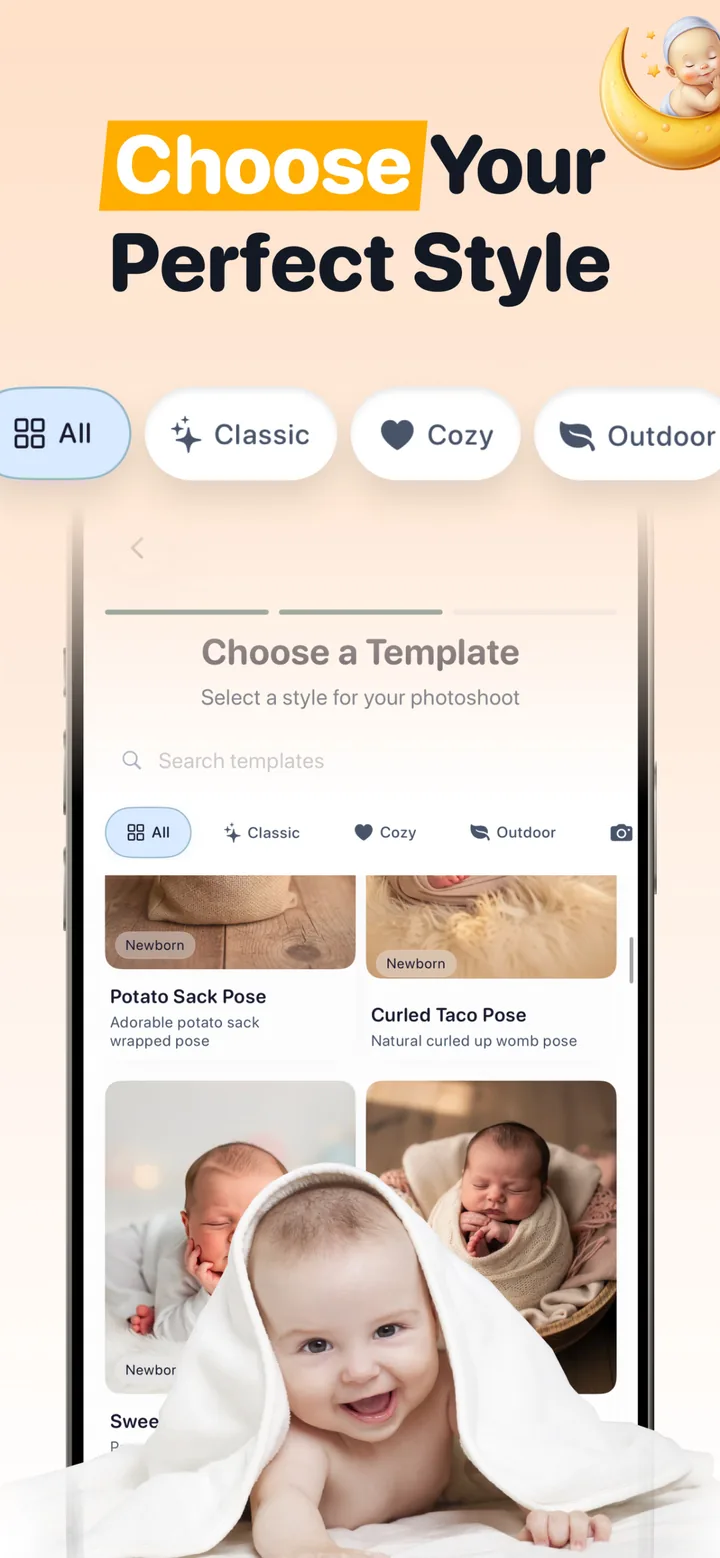

Create classic pose looks without DIY positioning
Use one clear source photo to generate Potato Sack, Curled Taco or Sweet Slumber-inspired portraits with digital outfits and props. Compare the result with the source and check details before exporting. The iPhone app is free to download, with in-app purchases available.
Get Totti on the App StorePutting it together
A complete at-home set can be simple: one back-lying portrait, a few detail close-ups and a photo of the baby in a parent's normal supported hold. Our at-home newborn photoshoot guide focuses on light, framing and preparation instead of complex posing.
Use the printable cheat sheet to decide before the camera comes out: the three green cards are no-pose photo ideas; the red card is a stop sign for DIY positioning. Leave side, tummy, wrapped, upright and composite poses to a trained newborn photographer, or create an obviously digital rendition from an ordinary source photo.