Wooden plaque, felt letterboard, or a card printed at home the night before: a hello world baby sign is whatever carries the words beside your newborn in announcement photos, usually "Hello World" plus your baby's name, birth date and sometimes the full stats. It turns a sweet photo into an announcement. One image, and everyone knows who arrived, when, and how loved they already are.
Below: the wording variations that work, the materials to choose between, how to compose the photo, and how to get a polished Hello World card without crafting anything at all.
What goes on a hello world baby sign?
Start with the greeting, then decide how much detail to add. The classic combinations:
- Name only: "Hello World, Amara Rose". Clean, timeless, and safe if you'd rather not share stats publicly.
- Name + date: "Hello World! Leo James · March 4, 2026". The most popular format, announcement and keepsake in one.
- Full birth stats: name, date, time, weight and length. Grandparents love it, and it preserves details you'll otherwise forget by month three.
- First-person lines: "Hi, I'm new here", "Worth the wait", "Hello World, I'm finally here".
- Sibling spin: "Hello World, my big sister already loves me". Pair it with a gentle group shot; see our sibling newborn photo ideas.
- Playful footnotes: "Est. 2026", "Now accepting cuddles", or the hospital-stats look styled like a tiny birth certificate.
Whatever you choose, keep it under ten words plus the stats. Signs are read at thumbnail size on a phone screen. Short wins.
How big should a hello world sign be?
Size and legibility matter more than the material. A sign around 8×10 inches sits comfortably beside a newborn without dwarfing them, and high-contrast lettering (dark text on light wood, white tiles on charcoal felt) survives the compression that messaging apps and social feeds apply. For a quick test, photograph the sign from three feet away and zoom out to thumbnail size. If you can't read it there, neither can your aunt.
Letter height is the other half of it. Aim for roughly one inch per line of text on an 8×10 sign, which is about what a standard letterboard tile gives you, and cap the sign at three lines. Four lines at half the height reads as a gray smudge in a feed.
Wooden plaque, letterboard or printed card?
| Material | The look | Cost | Reusable? |
|---|---|---|---|
| Wooden plaque (engraved or painted) | Warm, heirloom, photographs beautifully | $$ | Keepsake for the nursery shelf |
| Letterboard (felt or wood tiles) | Modern, flexible wording | $–$$ | Endlessly; great for monthly updates too |
| Printed card or paper sign | Fully custom fonts and colors | $ | One design per print |
| Chalkboard | Rustic, handwritten charm | $ | Yes, if your handwriting cooperates |
If you plan to continue with weekly or monthly updates, a letterboard earns its keep fast, since one purchase covers every milestone, and the wording can change from "Hello World" to "One month" to "Eight teeth" without anyone ordering or engraving anything new. Letterboard tiles also get lost. For a one-time announcement with heirloom value, wood is the winner. More milestone-tracking ideas live in our baby milestone photos guide.
Budget crafters have a fifth path. Design the sign free in any graphics app, print it on cardstock at home, and lean it against a stack of board books. It photographs surprisingly well as long as the paper stays flat. Tape it to a piece of cardboard to kill the curl.
Composing the photo with the sign
- Sign near the baby, never on the baby. Beside the head or at the feet, propped at a slight angle toward the camera.
- Face first. Focus on your baby's face and let the sign sit slightly softer in the frame, legible but not dominant.
- Shoot from above with baby lying on their back on a firm, floor-level pad and the sign outside their reach on the same plane. Kneel securely; never stand on a chair over the baby.
- Soft window light at an angle avoids reflections on glossy paint or chalk (chalk is the worst offender). The basics in our newborn lighting post apply exactly here.
- Fill the frame. Baby and sign should occupy most of the shot. Wide framing invites clutter and shrinks them both.
- Grab a detail shot too. The sign alone on the blanket, stats crisp and centered, makes a perfect second slide in a carousel post.
- Timing: most parents shoot announcement photos in the first two weeks, while the curled newborn look lasts; see when to take newborn photos.
The sign is a supporting actor. Your baby's face is the story — keep the sign small, close, and just slightly out of the spotlight.
The no-crafting option for Hello World cards
If the letterboard tiles never arrive on time or your handwriting refuses to cooperate, Totti has "Hello World" milestone cards built in. Upload one clear photo of your newborn, and the app generates a styled milestone portrait with a soft knit scene and wooden plaque while aiming to keep your baby recognizable. Use the before-and-after view to check the result. And because the app carries milestone styles beyond the first card, the announcement can match the weekly and monthly updates that follow.
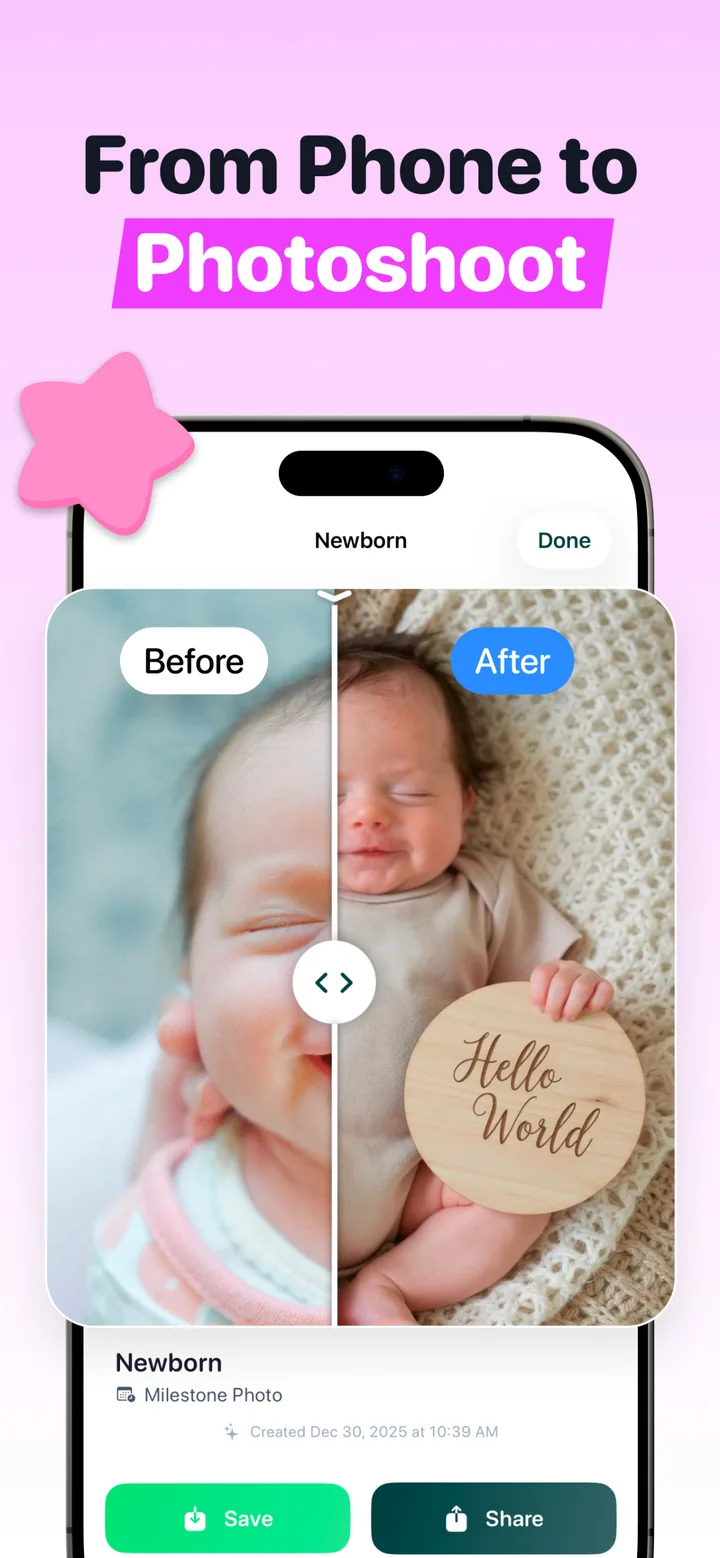

Your Hello World moment, ready in minutes
Upload one newborn photo, pick the Hello World milestone card, and export a studio-style announcement portrait in HD (2048×2560), wooden plaque included. Free to download on iPhone.
Get Totti on the App StoreHowever you make the sign (sanded, felted, printed or generated), pair the finished photo with the right words and send it out into the world. Our guide to birth announcement photo ideas covers the full package, our 150 birth announcement captions finish a post, and these baby name reveal quotes fit a name-first plaque.