A nine-month baby photoshoot is less a portrait sitting than a friendly chase. Babies at this age may sit, roll, scoot, crawl, clap or concentrate fiercely on one object—and then change direction before the camera is ready. Build the photographs around that movement rather than trying to stop it.
Clear a patch of floor, ask another adult to stay close and choose one familiar activity. Your baby does not need to crawl, stand or perform any specific milestone for these ideas to work. Photograph what is comfortable and true today.
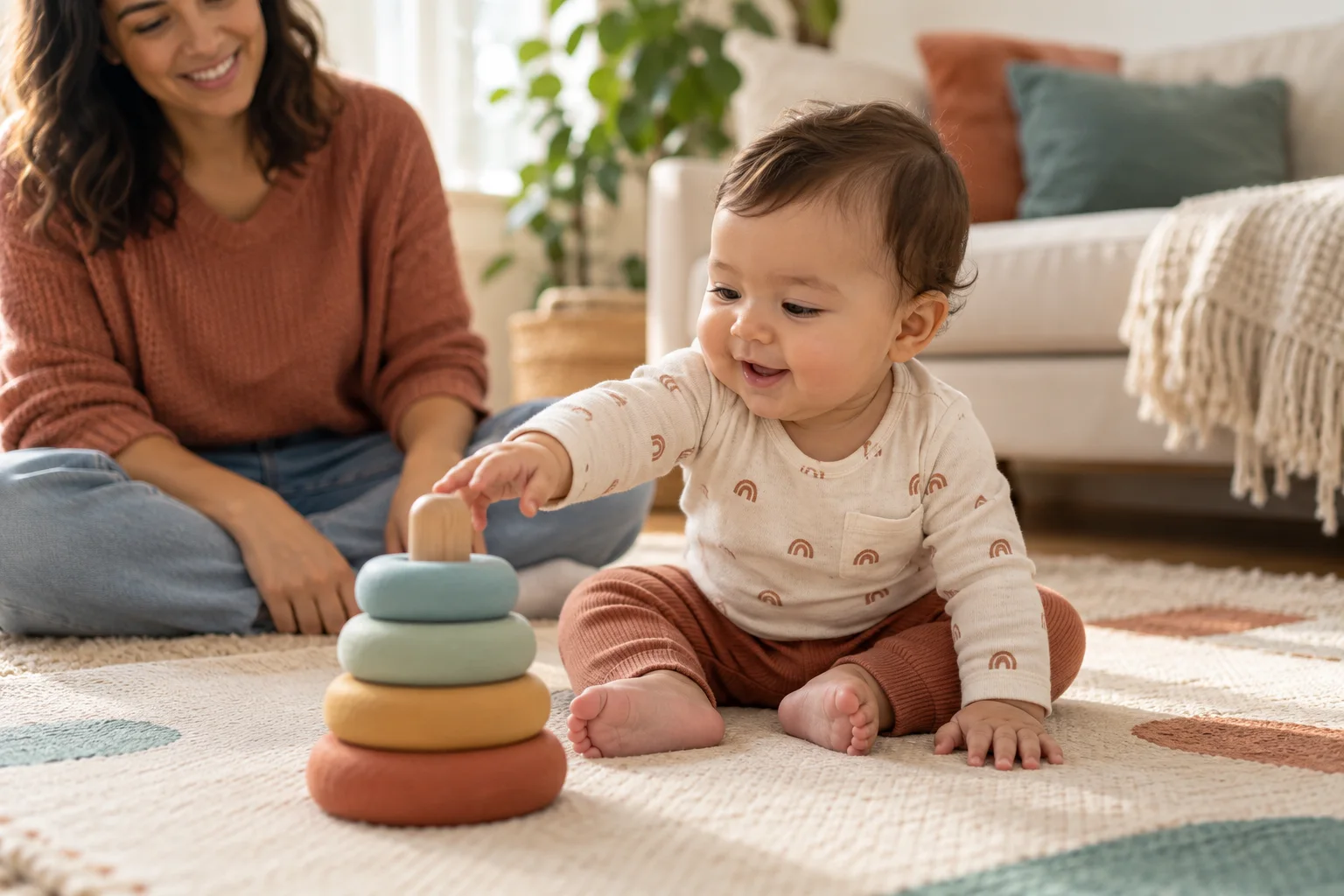
Prepare the room for movement first
Photograph on the floor, away from stairs, hard corners, trailing cords, hot drinks and unstable furniture. Remove small props that could be mouthed. A capable adult should stay within reach rather than stepping away to make the frame look empty.
Do not place a baby on a chair, crate, table or raised bed for a milestone photo. Do not encourage standing or pulling up solely for the camera. If your baby naturally uses a familiar stable surface during normal play, the caregiver—not the photographer—stays focused on safety. A floor portrait is always a complete alternative.
18 nine-month baby photoshoot ideas
1. Sit-and-reach sequence
Put one large, familiar toy on the mat and photograph the look, reach and touch. If sitting is not comfortable or independent today, use the same idea during tummy time or in a secure parent hold.
2. The crawl toward the camera
Lie at floor level while another adult calls from behind you. Keep the route clear and use a short burst as the baby approaches.
3. The crawl away
Photograph the determined knees, feet and glance back. A rear view adds movement to a gallery full of faces.
4. Peekaboo with a parent
Let the parent hide briefly behind their own hands or the side of a doorway while staying in the same safe room. Avoid draping fabric over the baby.
5. Clap, wave or point—if it happens
Ask for the familiar game once, then wait. Do not turn the session into repeated prompting if the baby is interested in something else.
6. The concentration face
Frame tightly while the baby examines a toy. Serious focus is as characteristic of nine months as a grin.
7. Parent on the floor
Sit the adult behind or beside the baby and photograph the shared play. Visible support and adult knees give the picture scale.
8. Laughing over a shoulder
A seated parent securely holds the baby facing outward while the photographer catches a side glance. Keep both adult arms involved.
9. The book-turning moment
Use one sturdy board book the baby already handles. Photograph broad page touches; skip books with loose flaps or damaged pieces.
10. Mirror recognition
Use a baby-safe shatter-resistant floor mirror during active supervision. Shoot over the shoulder for face and reflection together.
11. High-angle floor portrait
Kneel beside an awake baby lying on a clear mat and hold the phone securely with two hands. Never balance a device overhead or stand on furniture.
12. Tiny teeth, open-mouth laugh or pursed lips
Use normal conversation or peekaboo instead of touching the face. Teeth are optional; the expression is the subject.
13. Hands-and-toy detail
Fill the frame with fingers exploring one large object. This quieter image breaks up an action-heavy photo set.
14. Bare feet on the mat
Include the curled toes and weight shift that happen naturally during play. Do not pose a stance the baby does not initiate.
15. Nine-month card on the wall
Tape one paper marker securely to a distant wall rather than putting loose numbers on the floor. A digital label afterward works too.
16. Match a three- or six-month frame
Repeat the same window, rug or parent-lap angle. Continuity comes from composition, not forcing an earlier pose.
17. Family floor pile
Parents and siblings sit around the baby on a rug. Let everyone look at the baby for one frame and at the camera for the next.
18. The exit
Keep shooting as the baby crawls out of the setup or reaches for the parent. The honest ending often becomes the favorite.
How to photograph a fast baby on iPhone
- Add light before speed. Open curtains and move the play area into indirect daylight; more light lets the camera freeze motion better.
- Use 1×. The main camera usually handles indoor movement more cleanly than digital zoom.
- Start before the action. Frame the clear route, then ask the second adult to engage.
- Use bursts selectively. Keep the beginning, peak and ending—not forty near-identical files.
- Stay low. Eye-level photographs show direction and expression; standing above compresses the movement.
- Prioritize safety over focus. The nearby adult watches the baby, not the screen.
For a consistent series from this month to the first birthday, combine the setup advice in our baby milestone photo guide with the printable rhythm in monthly baby picture ideas.
A nine-frame gallery that tells the whole month
- Wide room-and-baby context
- Eye-level sitting or tummy-time portrait
- Movement toward the camera
- Movement away from the camera
- Parent interaction
- Concentration face
- Hand-and-toy detail
- Feet detail
- Nine-month marker or comparison frame
If you are planning ahead, the first-birthday photoshoot guide explains how to keep the next session recognizable without repeating the same decorations.
Use digital styling after playtime
AI styling can change a background, outfit or visual theme after you capture a safe source photo. It cannot verify a milestone or make an unsafe physical setup acceptable. Keep the original and check hands, facial features, clothing edges and background details before saving a result.
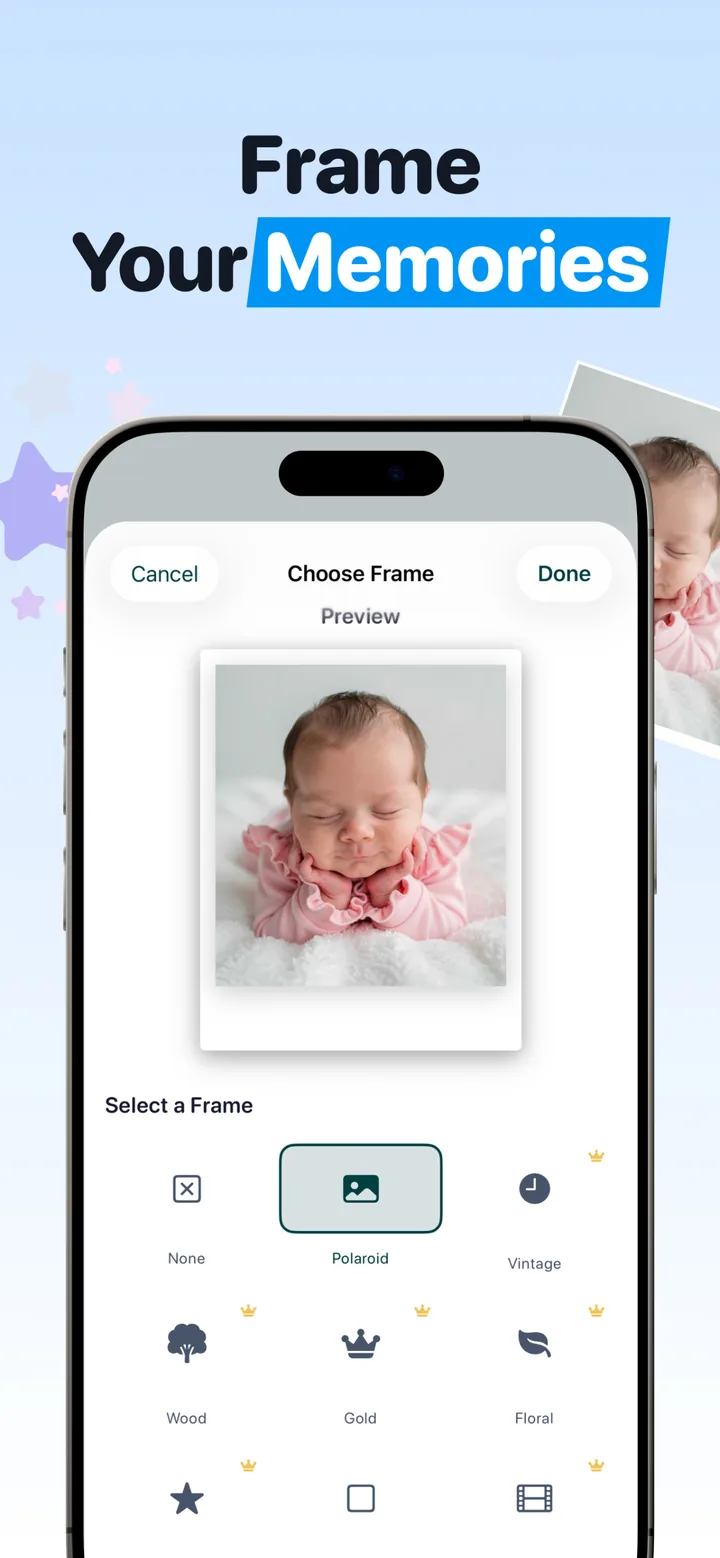
Before sending a child's candid to any editing service, obtain permission from every relevant parent or legal guardian and verify the service's current storage, retention, model-training and deletion terms with our child-photo AI privacy checklist.

Give a candid nine-month photo a finished look
Try studio-style templates and frames with a clear source photo in Totti. Free to download; optional in-app purchases. Results vary, so review the finished portrait at full size.
View Totti on the App Store